Modern electric distribution systems are becoming increasingly complex. Utilities are expected to deliver reliable power, integrate distributed energy resources, improve efficiency, and reduce operational costs — all while maintaining customer voltage within strict standards.
One of the most effective technologies helping utilities achieve these goals is Integrated Volt/VAR Control (IVVC).
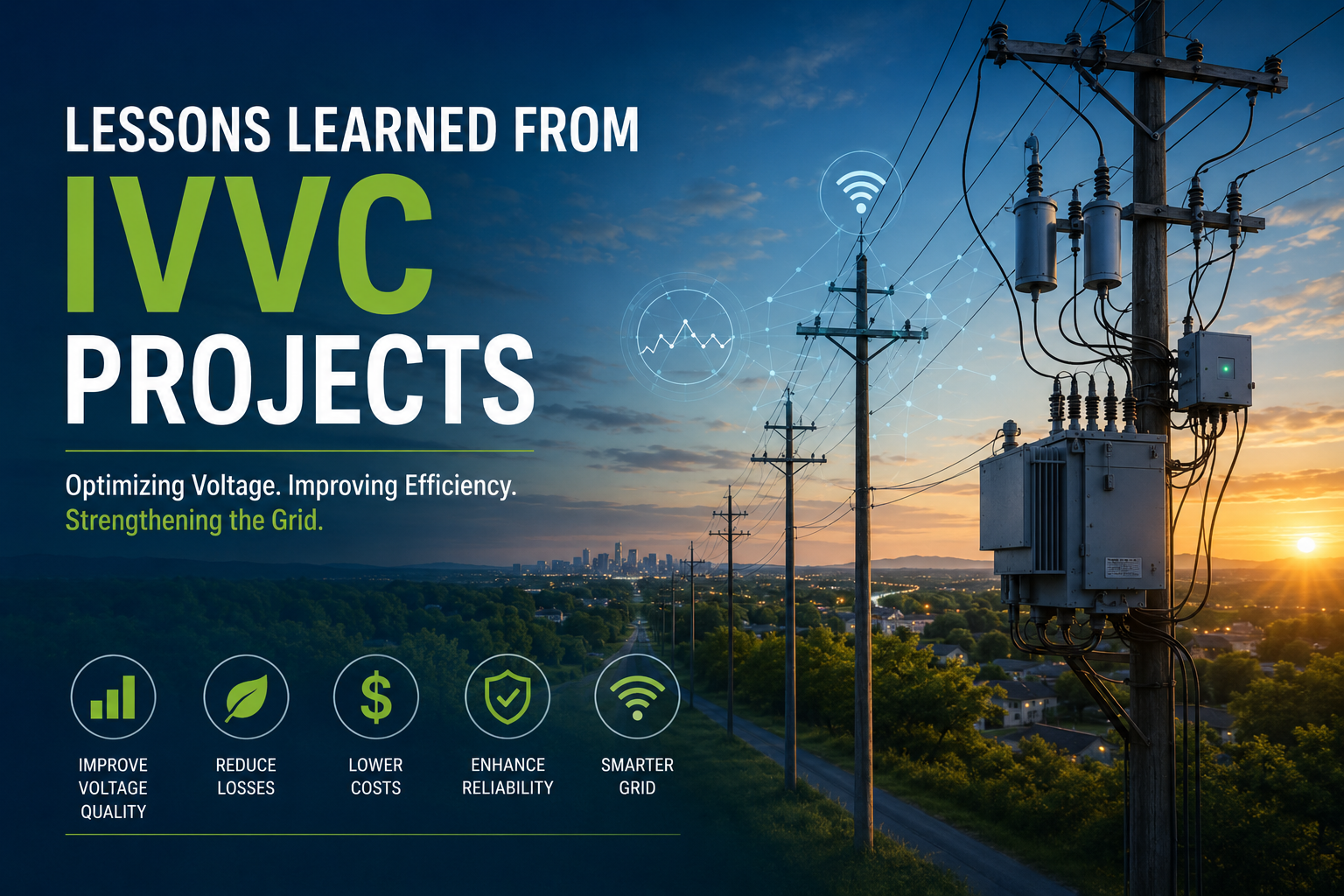
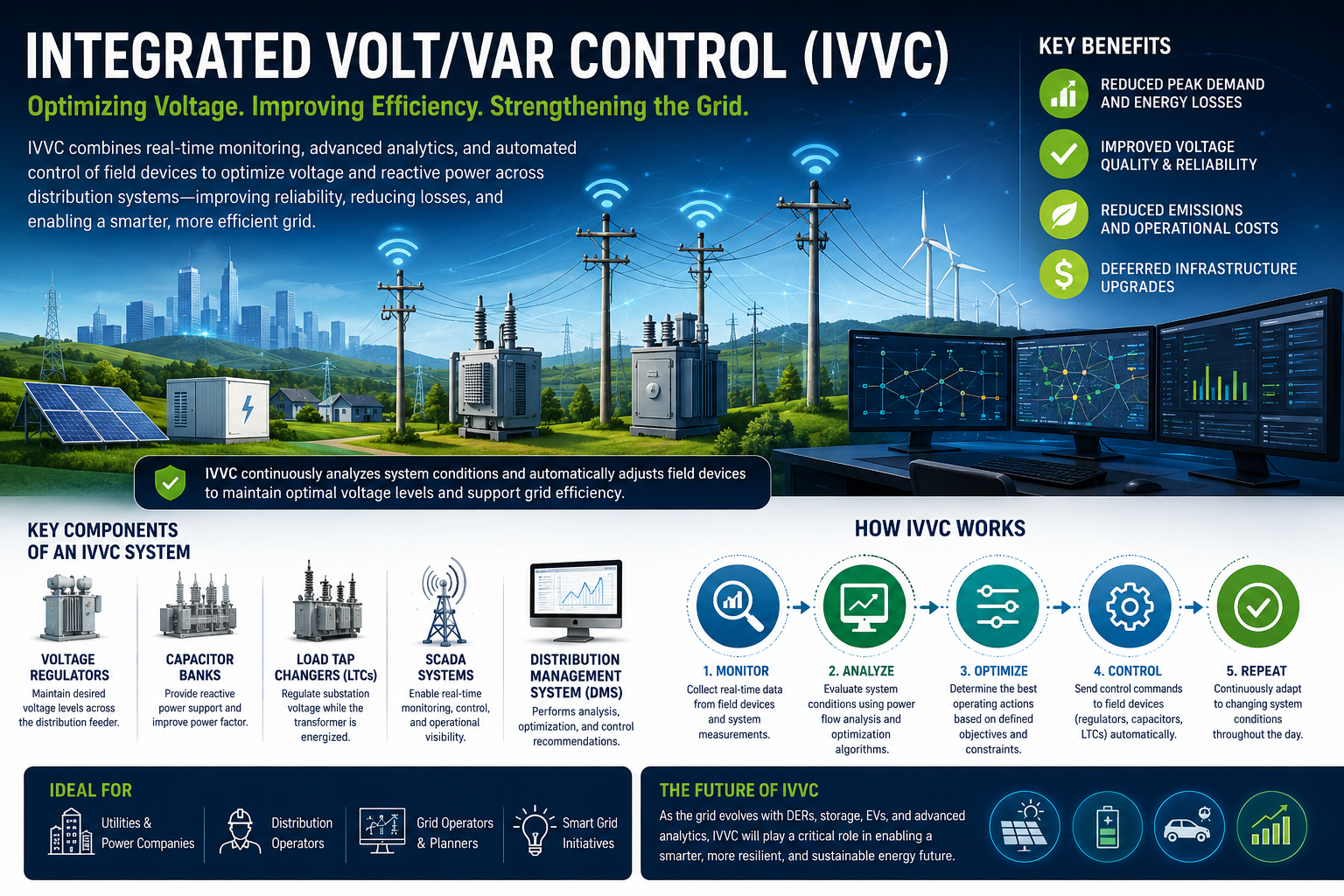
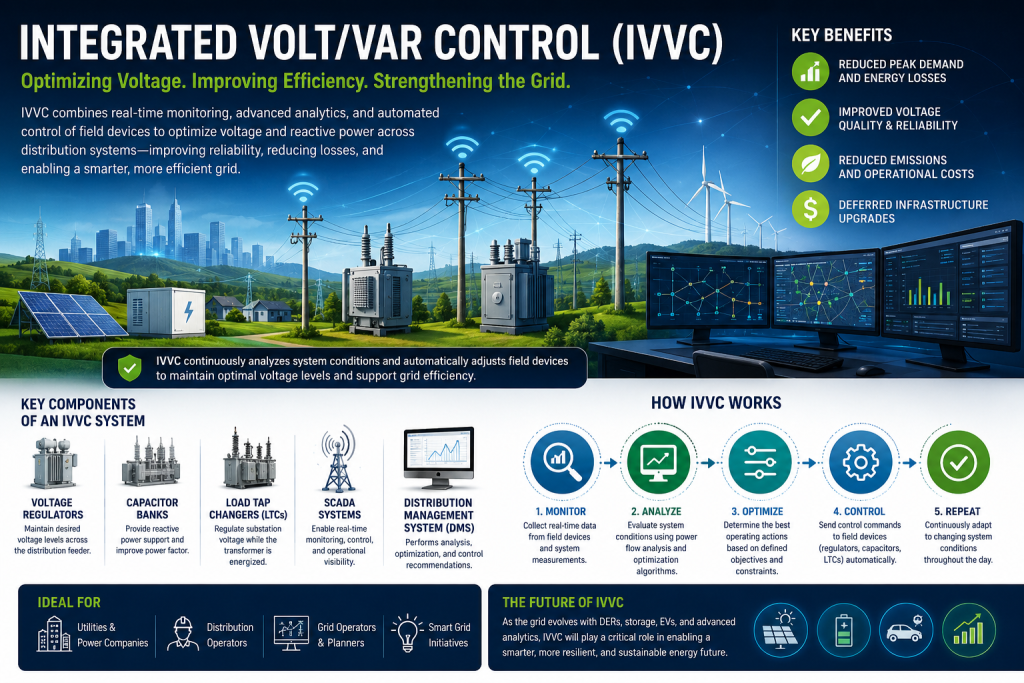
IVVC combines advanced monitoring, automation, power flow analysis, and intelligent control of field devices to optimize voltage and reactive power across the electric distribution system. Although often operating behind the scenes, IVVC plays a major role in improving grid efficiency, reliability, and overall system performance.
What is IVVC?
Integrated Volt/VAR Control (IVVC) is an advanced distribution automation application that manages voltage and reactive power (VARs) across distribution feeders in near real time.
The primary objection of IVVC is to:
- maintain acceptable customer voltage
- optimize power factor
- reduce energy losses
- and minimize overall system demand
Utilities may also refer to IVVC using related terms such as:
- Volt/VAR Optimization (VVO)
- Volt/VAR Control (VVC)
- Load Voltage Management (LVM)
At its core, IVVC continuously evaluates system conditions and automatically adjusts field devices to maintain an efficient voltage profile across the distribution network.
Why voltage optimization matters?
Electric distribution systems are designed to operate within established voltage limits. In North America, customer service voltage is generally maintained within ANSI standards, typically within ±5% of nominal voltage.
Without optimization, utilities often operate systems conservatively at higher voltage levels to ensure all customers remain within acceptable limits during peak loading conditions.
However, operating at unnecessarily high voltage can:
- increase energy consumption,
- increase system losses,
- reduce equipment efficiency,
- and raise peak demand.
IVVC helps utilities lower and optimize voltage safely while still maintaining service quality and reliability.
This concept is commonly known as Conservation Voltage Reduction (CVR).
Understanding Conservation Voltage Reduction (CVR)
Conservation Voltage Reduction is based on a simple principle:
Lower voltage can reduce electrical demand and energy consumption for certain types of loads.
The relationship between voltage reduction and load reduction is commonly represented by the CVR factor:
For example, if a 2% voltage reduction produces a 1% load reduction, the CVR factor would be 0.5.
Even relatively small voltage reductions across a large utility service territory can produce significant benefits, including:
- reduced peak demand,
- lower energy consumption,
- deferred infrastructure upgrades,
- and reduced fuel and emissions costs.
As utilities continue modernizing the grid, CVR remains one of the most practical and cost-effective energy efficiency strategies available.
Key Components of an IVVC System
A successful IVVC implementation depends on multiple field and software systems working together in real time.
1. Voltage Regulators
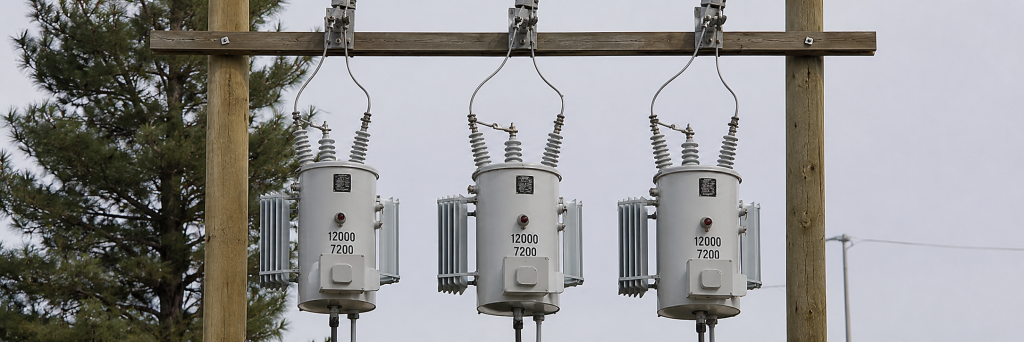
Voltage regulators automatically adjust feeder voltage by changing tap positions to maintain desired voltage levels throughout the circuit.
These devices help compensate for voltage drop as electrical load changes across the feeder.
2. Capacitor Banks
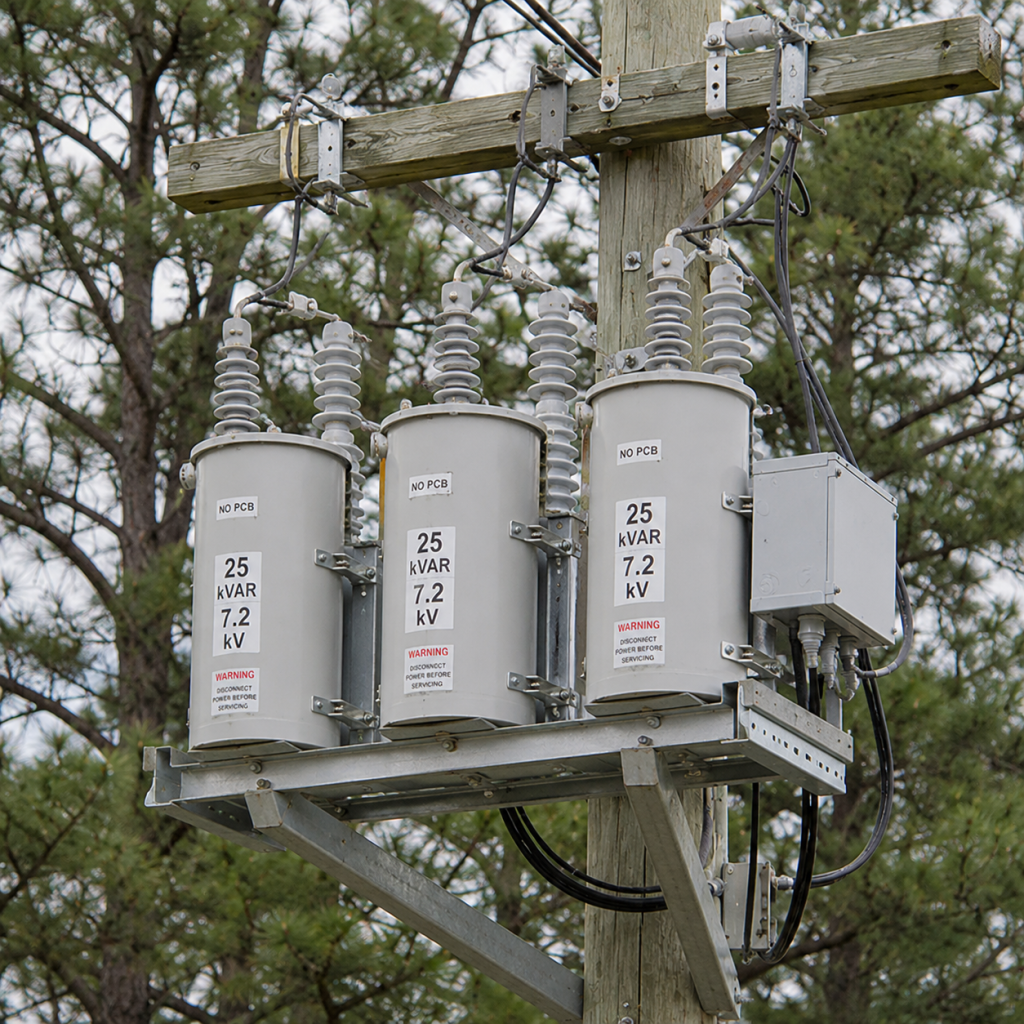
Capacitor banks provide reactive power support and improve power factor.
Proper capacitor control helps:
- reduce reactive power demand,
- lower system losses,
- improve voltage profiles,
- and increase feeder efficiency.
Modern IVVC systems often monitor and control capacitor banks remotely through SCADA and advanced controllers.
3. Load Tap Changers (LTCs)
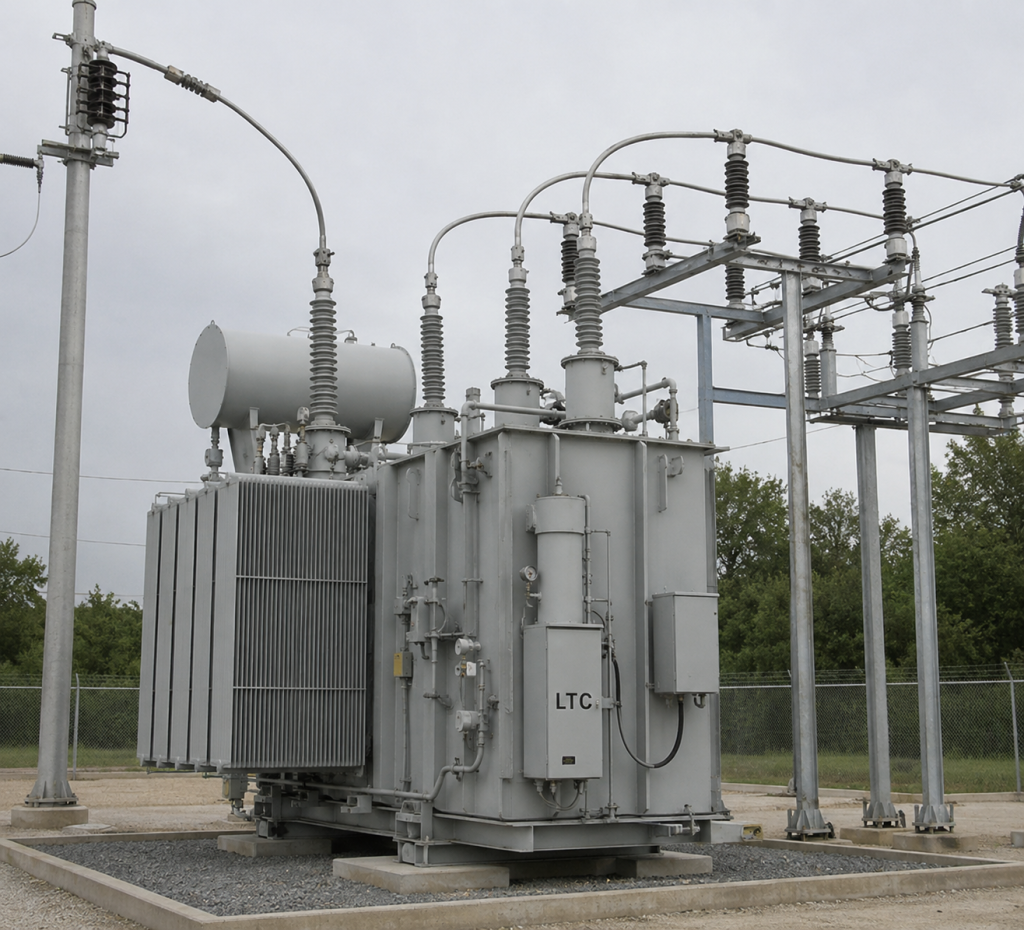
Load Tap Changers installed at substations regulate transformer output voltage while the transformer remains energized.
LTCs play a critical role in maintaining substation bus voltage and supporting overall feeder voltage optimization.
4. SCADA Systems
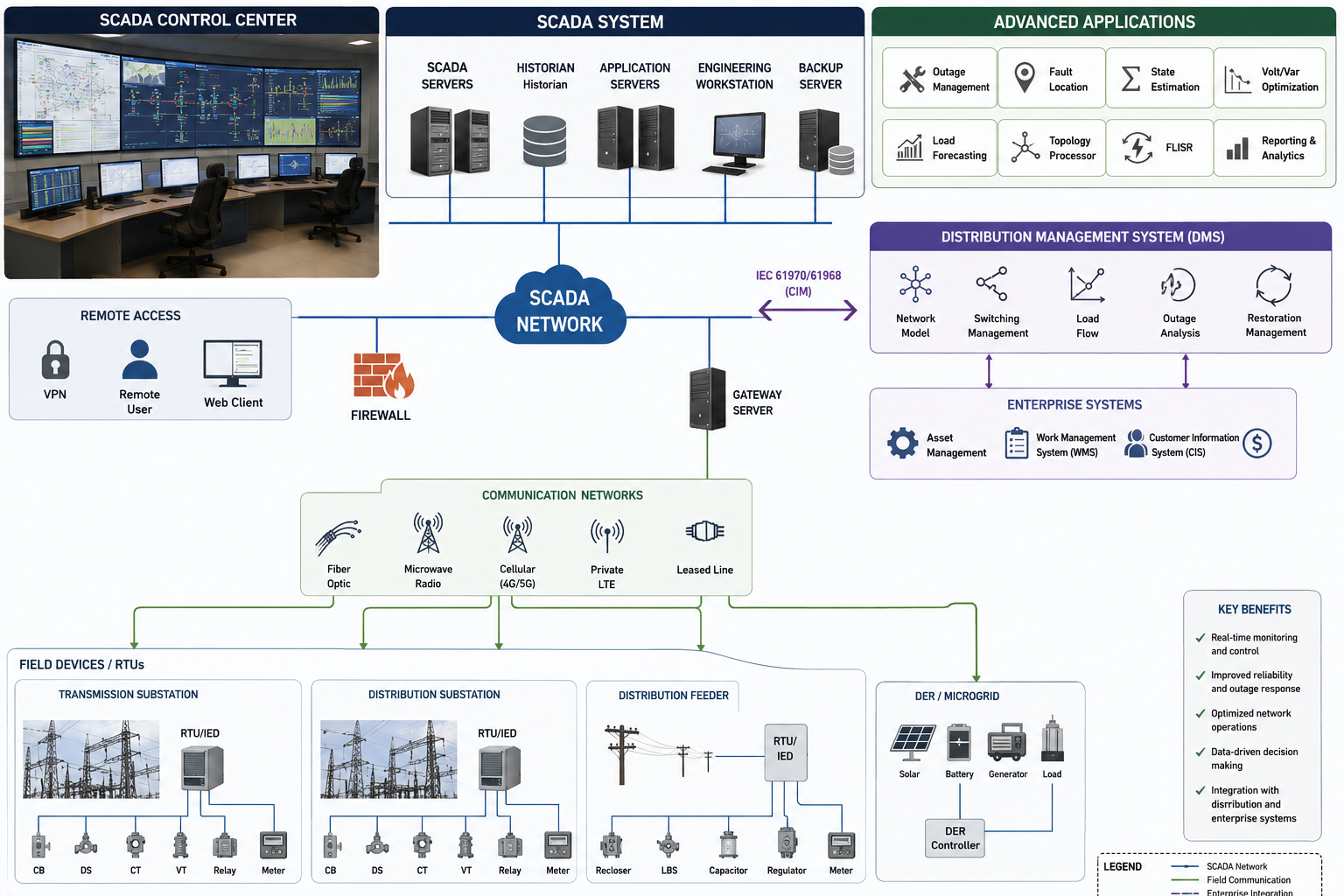
Supervisory Control and Data Acquisition (SCADA) systems provide the communication backbone for IVVC operations.
SCADA enables:
- real-time monitoring,
- remote control,
- alarm management,
- and operational visibility of field devices.
Without reliable communications and telemetry, advanced IVVC functionality becomes significantly more difficult.
5. Distribution Management Systems (DMS)
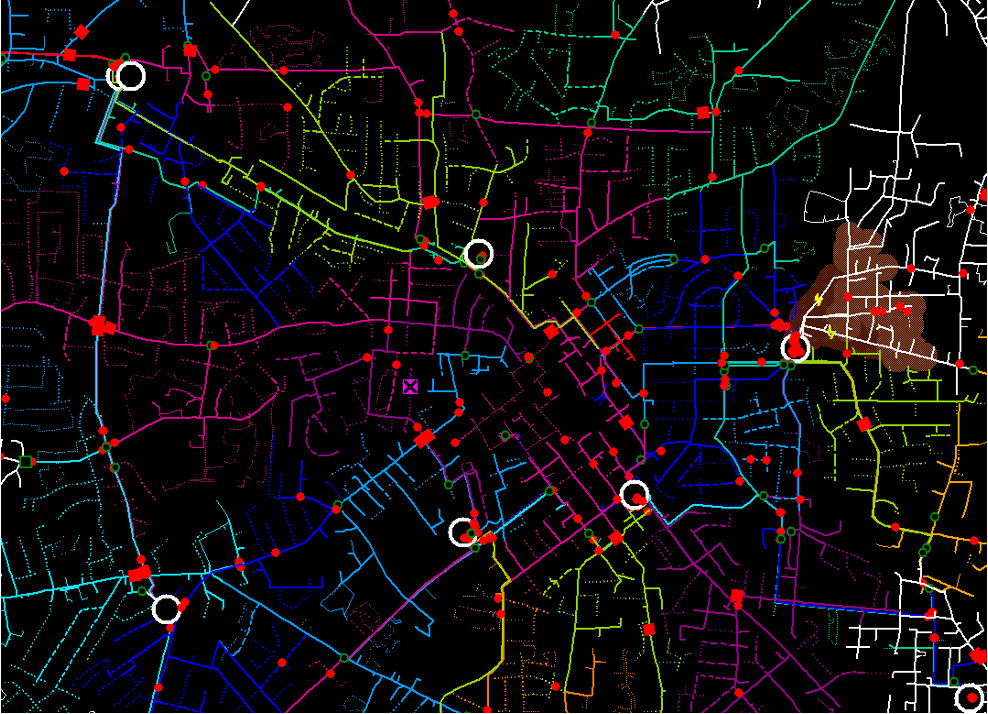
The Distribution Management System acts as the intelligence layer behind IVVC.
Advanced DMS applications perform:
- distribution power flow analysis,
- topology processing,
- voltage calculations,
- optimization routines,
- and control recommendations.
Modern IVVC systems rely heavily on accurate real-time system models and field measurements.
How IVVC Works?
IVVC continuously analyzes feeder conditions using real-time measurements and power flow calculations.
The system evaluates:
- feeder voltage,
- load conditions,
- reactive power flow,
- capacitor status,
- regulator positions,
- and operational constraints.
Based on optimization objectives, the system determines whether operating changes would improve overall feeder performance.
Possible optimization goals include:
- minimizing demand,
- reducing losses,
- improving power factor,
- maintaining voltage compliance,
- or reducing voltage violations.
The system then issues control commands to devices such as:
- capacitor banks,
- voltage regulators,
- or LTC transformers.
This process occurs continuously as system conditions change throughout the day.
Importance of Accurate System Modeling
One of the most overlooked aspects of IVVC deployment is model accuracy.
Advanced optimization applications depend heavily on:
- accurate GIS models,
- correct feeder connectivity,
- real-time switching status,
- and high-quality telemetry.
If the electrical model does not match actual field conditions, optimization results may become inaccurate.
Utilities implementing advanced distribution automation programs often invest significant effort into:
- model validation,
- field verification,
- communications reliability,
- and operational coordination.
In many cases, the success of IVVC depends just as much on operational discipline as on the software itself.
Operational Challenges of IVVC
Although IVVC provides major benefits, implementation is not without challenges.
Common issues include:
- communication failures,
- incorrect device status,
- inaccurate network models,
- SCADA data quality issues,
- field equipment limitations,
- and switching coordination challenges.
Utilities must also coordinate closely between:
- grid operations,
- field crews,
- engineering,
- SCADA support,
- and system planning teams.
As distribution systems become more dynamic with solar, batteries, EV charging, and distributed energy resources, these operational challenges continue to evolve.
Benefits of IVVC
When implemented correctly, IVVC can provide significant operational and financial value.
Potential benefits include:
- reduced peak demand,
- lower energy losses,
- improved power factor,
- reduced emissions,
- improved voltage consistency,
- deferred capital upgrades,
- and enhanced grid visibility.
IVVC also supports broader grid modernization initiatives by enabling more intelligent and automated distribution system operations.
The future of IVVC
The role of IVVC is becoming increasingly important as utilities integrate:
- distributed solar,
- battery energy storage,
- electric vehicles,
- and advanced distribution automation technologies.
Future IVVC systems will likely incorporate:
- artificial intelligence,
- predictive analytics,
- advanced forecasting,
- DER coordination,
- and adaptive optimization strategies.
As utilities continue transitioning toward smarter and more decentralized grids, voltage optimization will remain a critical operational function.
Final Thoughts
Integrated Volt/VAR Control is far more than a voltage reduction tool. It represents a major step toward intelligent, data-driven distribution system operations.
By combining real-time monitoring, advanced analytics, automation, and field device coordination, IVVC helps utilities operate the grid more efficiently while maintaining reliability and customer service quality.
Integrated Volt/VAR Control is far more than a voltage reduction tool. It represents a major step toward intelligent, data-driven distribution system operations.
By combining real-time monitoring, advanced analytics, automation, and field device coordination, IVVC helps utilities operate the grid more efficiently while maintaining reliability and customer service quality.
As grid modernization continues accelerating across the industry, IVVC will remain one of the foundational technologies enabling the next generation of smart distribution systems.
If you want to learn more or interested to implement IVVC in your grid, please contact for discussion and schedule for free consultion.